- System
Growth System
Missed Call Text Back
Never lose a lead to a missed call again.
Customer Reactivation
Turn your old customer list into new bookings & reviews.
AI Receptionist
Automate your customer service & admin.
Google Reviews
Automate your 5-star review collection.
Booking System
Automate your calendar and appointments.
All-In-One Inbox
Every conversation in one single place.
Email Marketing
Automated follow-ups and newsletters.
Areas we cover
North East
Across the North East, town by town.
Newcastle
Web design for Newcastle trades.
Northumberland
Websites for Northumberland trades.
Sunderland
Web design for Sunderland trades.
Durham
Web design for Durham trades.
Gateshead
Web design for Gateshead trades.
Cramlington
Our home town. Local web design.
Blyth
Web design for Blyth trades.
Bedlington
Web design for Bedlington trades.
Ashington
Web design for Ashington trades.
Morpeth
Web design for Morpeth trades.
Ponteland
Web design for Ponteland trades.
Killingworth
Web design for Killingworth trades.
- Blog
Recent posts
Why your best customers never leave a review
Reviews
The hidden cost of one missed call
Missed Calls
What your business is worth without you in it
Business Ownership
Why the first message never wins the job
Follow Up
Backlinks vs reviews vs on-page SEO
Local SEO
Web design Cramlington: built for how locals actually buy
Web Design
Why Costa Blanca websites look identical
Web Design
Get found on ChatGPT and AI
Local SEO
How to choose a web design agency
Web Design
How to reduce no-shows
Systems & Automation
- About
- Contact
How much does a website cost? The honest answer.
Most agencies say "it depends" and push you to a sales call. Here are the actual numbers, what a website costs in the UK in 2026, what drives the price, and why the monthly model makes more sense for most local businesses.
By Shaun Chrisp, founder · Published · Updated
7 min read
A cheap website isn't really cheap. You're just paying for it later, in lost leads, poor performance, and someone else's bill to fix it.
Everyone wants a straight answer to this question. Most agencies won't give you one. They'll say "it depends" and push you towards a sales call. Which is frustrating when you're just trying to work out if you can afford it.
So here it is, straight, no fluff, with real numbers.
In this article:
Why the prices are all over the place
You Google "website cost UK" and you get quotes ranging from £300 to £30,000. Same product. Completely different prices.
That's not agencies being clever. That's because a website isn't one thing. A five-page brochure site for a local plumber is a completely different job to a 500-product ecommerce store with custom integrations.
The price reflects the time, skill, and tools that go into it. And in 2026, those costs have only gone one direction.
What a website actually costs in the UK in 2026
Here's what the market looks like right now.
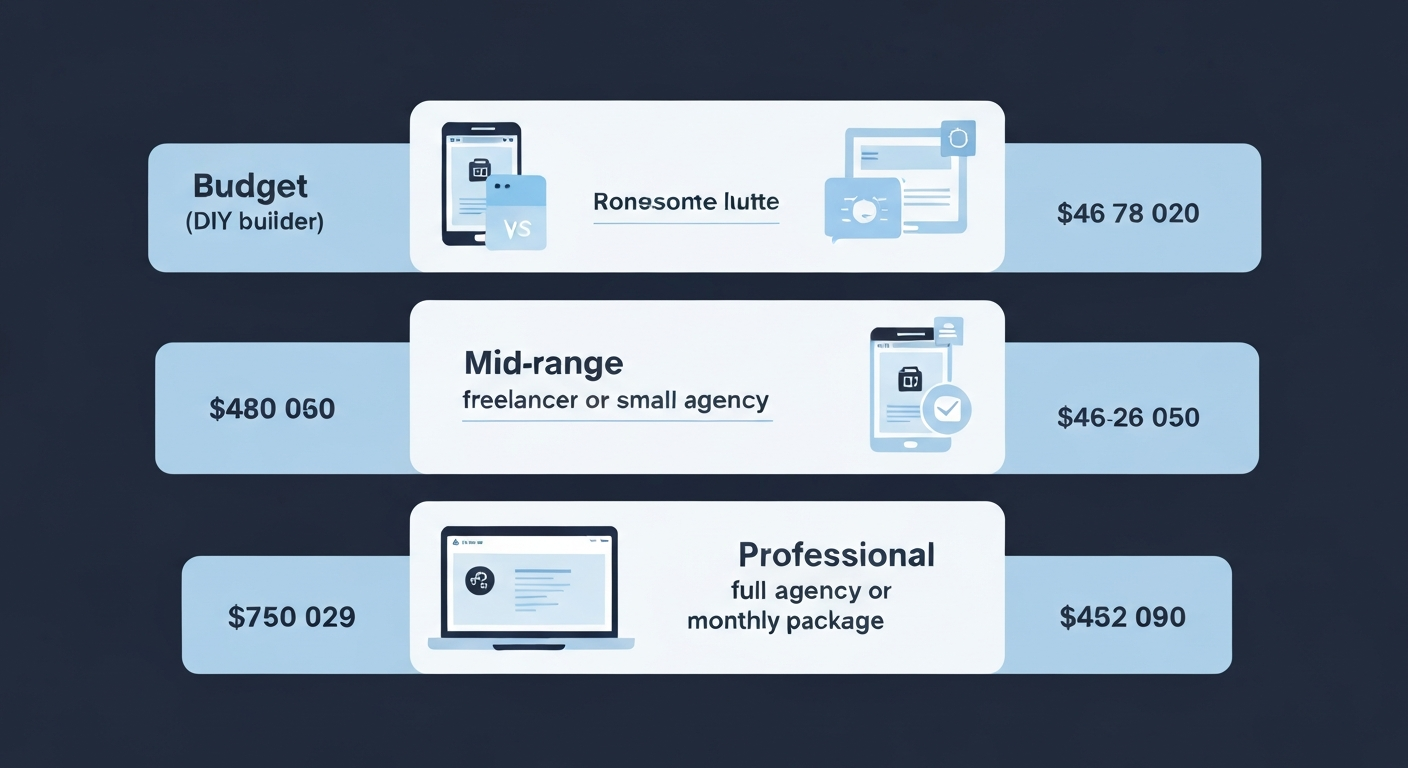
A basic brochure website of five to ten pages costs between £500 and £4,000 from a freelancer, or £2,000 to £5,000 from a regional agency.
UK web design agencies charge £3,000 to £30,000 or more for a small business website. Regional agencies average £3,000 to £8,000. London-based agencies start from £8,000.
Some agencies offer all-inclusive monthly packages starting from around £200 to £400 per month that bundle hosting, support, and basic updates.
At Chrisp Design we do it differently. A fully built, conversion-focused website for your local business starts from £97 per month. No big upfront bill. No contracts. Just a proper site that works, maintained and supported every month.
That's not a cheap website. That's a smart way to pay for a professional one.
What you're actually paying for
When someone quotes you £500 for a website, ask yourself, how many hours can they possibly spend on it at that price?
A proper website involves strategy, copywriting, design, development, mobile optimisation, page speed, SEO foundations, and testing. That takes time. Real time.
A decent website for a small UK business in 2026 costs between £2,000 and £8,000 plus running costs. If someone's quoting you £500, they're cutting corners somewhere. And those corners are usually the ones that matter.
Here's what actually drives the cost:
Number of pages
More pages means more design, more content, more testing. A five-page site is a different job to a thirty-page site with location pages, service breakdowns, and a blog.
Custom vs template
A template-based build can look perfectly professional and costs less because the layout decisions are already made. A fully custom design built from scratch costs more. Neither is better by default. What matters is whether it converts.
Copywriting
Someone has to write the words. If you're providing the copy yourself, the cost goes down. Professional copywriting typically adds £500 to £2,000 depending on the number of pages. It's worth every penny, good copy converts visitors into customers far better than anything you knock out yourself at midnight.
Integrations and functionality
Booking systems, CRM connections, quote calculators, live chat, each one adds development time. Simple plugin-based stuff is usually included. Custom work costs extra.
Ongoing costs
This is the bit most people forget to budget for. A reasonable rule is 15 to 20 percent of the original build cost per year, covering hosting, maintenance, security, updates, and occasional content changes.
The cheap website trap
A £500 website isn't really £500.
The agency has to make a margin. Which means they're spending very little time on it. Which means it's a template, rushed, with no real thought given to how it performs, how it loads, or how it looks on mobile.
And when something breaks, or Google updates its algorithm, there's nobody looking after it.
You then spend the next two years either embarrassed by it or paying someone else to fix it. Which ends up costing more than if you'd done it properly the first time.
What sounds cheap now will get expensive in the long run. Back your brand and be represented properly, it will make you more money.
The monthly model makes more sense for most local businesses
A large upfront payment for a website used to be the only option. You'd pay £3,000 to £5,000, own the site, and then slowly watch it go out of date because you couldn't afford to maintain it.
The monthly model changes that.
You get a professional, conversion-focused website built and live within days. Hosting, maintenance, and support is included. Updates get made. The site stays current. And your cash flow doesn't take a hit upfront.
At Chrisp Design that starts from £97 per month. No setup fee. No contract. Cancel any time.
For a local trade business or service company, that's less than the profit on a single job, and it works for you every day of the week.
What you should actually look for
Before you spend a penny on a website, check three things.
Does the agency show their work? Portfolio, case studies, real client sites, not just mockups.
Do they build sites that convert, not just sites that look nice? Pretty and effective are not the same thing.
What happens after it goes live? Who maintains it? Who do you call when something breaks?
If they can't answer all three clearly, keep looking.
"A website isn't a cost. It's the hardest working member of your team, available 24 hours a day, taking enquiries while you sleep. The question isn't whether you can afford a good one. It's whether you can afford not to have one."
Key takeaways
- UK website costs in 2026 range from £500 for a basic freelancer build to £30,000 or more for a full agency site, the difference is time, skill, and what the site is actually built to do
- What drives the price is pages, custom vs template design, copywriting, integrations, and ongoing maintenance costs
- A £500 website is rarely actually £500, you pay the rest later in lost leads, poor performance, and someone else's bill to fix it
- The monthly model makes more sense for most local businesses, professional site, no upfront cost, hosting and support included from £97 per month with Chrisp Design
- Before choosing anyone, check their portfolio, ask how they measure conversions, and find out exactly what support you get after the site goes live

Find our guides useful? Add Chrisp Design as a preferred source on Google to see more of our articles in your search results.
Add as preferred source on Google