- System
Growth System
Missed Call Text Back
Never lose a lead to a missed call again.
Customer Reactivation
Turn your old customer list into new bookings & reviews.
AI Receptionist
Automate your customer service & admin.
Google Reviews
Automate your 5-star review collection.
Booking System
Automate your calendar and appointments.
All-In-One Inbox
Every conversation in one single place.
Email Marketing
Automated follow-ups and newsletters.
Areas we cover
North East
Across the North East, town by town.
Newcastle
Web design for Newcastle trades.
Northumberland
Websites for Northumberland trades.
Sunderland
Web design for Sunderland trades.
Durham
Web design for Durham trades.
Gateshead
Web design for Gateshead trades.
Cramlington
Our home town. Local web design.
Blyth
Web design for Blyth trades.
Bedlington
Web design for Bedlington trades.
Ashington
Web design for Ashington trades.
Morpeth
Web design for Morpeth trades.
Ponteland
Web design for Ponteland trades.
Killingworth
Web design for Killingworth trades.
- Blog
Recent posts
Why your best customers never leave a review
Reviews
The hidden cost of one missed call
Missed Calls
What your business is worth without you in it
Business Ownership
Why the first message never wins the job
Follow Up
Backlinks vs reviews vs on-page SEO
Local SEO
Web design Cramlington: built for how locals actually buy
Web Design
Why Costa Blanca websites look identical
Web Design
Get found on ChatGPT and AI
Local SEO
How to choose a web design agency
Web Design
How to reduce no-shows
Systems & Automation
- About
- Contact
How to reduce no-shows as a local business
You blocked out time. You drove across town. Nobody showed up. That's not just a missed appointment. That's money, time, and a slot that could have gone to a paying customer. Here's how to stop it happening.
By Shaun Chrisp, founder · Published · Updated
7 min read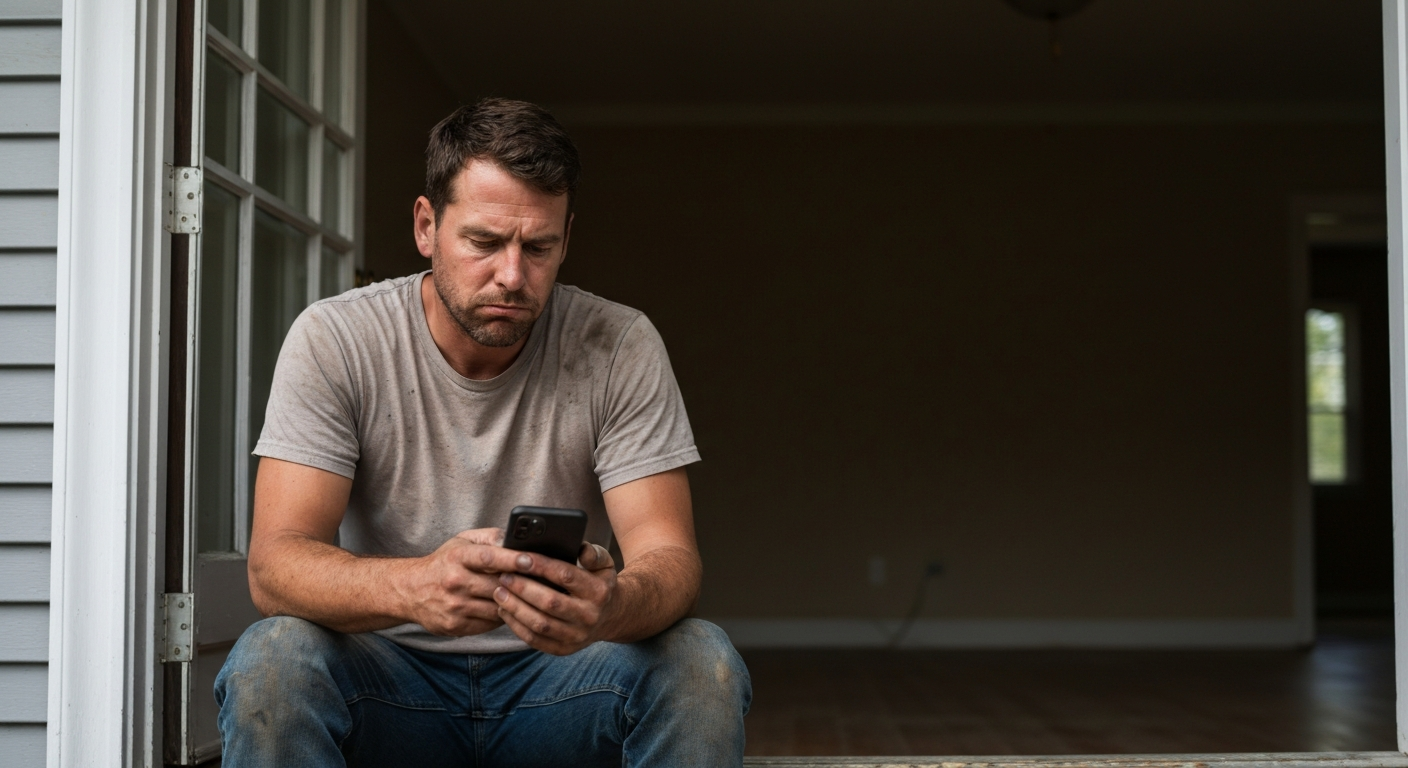
Every no-show costs you twice. The job you lost and the job you could have booked in that slot instead.
Thursday morning. You've got a 10am consultation booked. You drive 25 minutes to get there. Set up. Wait.
10:05. Nothing.
10:15. You call. Straight to voicemail.
10:30. You pack up and leave. Half a morning gone. Fuel wasted. And the two enquiries you could have dealt with in that time? They called someone else while you were sitting in an empty room.
That's a no-show. And if you run a local service business, it's probably happening more often than you'd like to admit.
In this article:
What no-shows actually cost you
Most business owners think of a no-show as one lost job. It's not. It's at least three things.
The job itself. Whatever you would have earned from that appointment is gone.
The time. The travel, the preparation, the waiting around. That time is worth money even if you don't think of it that way. An hour wasted is an hour you could have spent on a paying customer or following up on new leads.
The opportunity cost. The slot that customer was sitting in could have been given to someone else. Someone who would have actually shown up. Instead it's empty and you're driving home with nothing to show for the morning.
Now add it up. Say you average two no-shows a week. Each one costs you an hour of time plus travel plus the job value. Even conservatively, that's hundreds of pounds a month. Over a year? Thousands. Just from people not turning up.
Why people don't show up
It's rarely malicious. Most people who don't show up aren't trying to waste your time. They just forgot.
They booked the appointment two weeks ago. Life happened. They didn't write it down. By Thursday morning they've completely forgotten it exists.
Some of them booked with multiple businesses and went with whoever confirmed first. You didn't confirm. So they assumed it wasn't happening and booked someone else without telling you.
Some of them had a genuine change of plans but felt too awkward to cancel. So they just didn't show up. Easier to ignore it than make the call.
And a small percentage were never serious in the first place. They booked on impulse, cooled off, and ghosted.
The common thread through almost all of these is the same. Nobody reminded them. Nobody confirmed. Nobody gave them an easy way to reschedule if they needed to.
The "I'll just call to confirm" approach doesn't work
Some business owners try to fix this by calling every customer the day before to confirm.
In theory that works. In practice it falls apart immediately.
You're on a job at 4pm and don't have time to call five people to confirm tomorrow's appointments. You tell yourself you'll do it in the evening. You get home, have dinner, forget. By the morning you're already on the road.
Even when you do remember, half of them don't pick up. So you leave a voicemail that nobody listens to. The confirmation call becomes another task on a list that's already too long.
Manual confirmation doesn't scale. It relies on you having time, remembering, and the customer actually answering. Too many points of failure.
What actually reduces no-shows
Automated reminders.
Not a phone call you need to make. Not a mental note to check the diary. A sequence of messages that goes out automatically for every single appointment, every single time, without you doing anything.
The data on this is clear. Businesses that use automated appointment reminders see no-show rates drop significantly. Some studies put the reduction at 30 to 50 percent. For a local business losing two or three appointments a week, that's the difference between bleeding money and running a tight operation.
The reason it works is simple. People need reminding. A text is easy to see, easy to read, and easy to act on. If they can't make it, they tell you in advance instead of just not showing up. If they can, the reminder cements it in their mind.
The reminder sequence that works
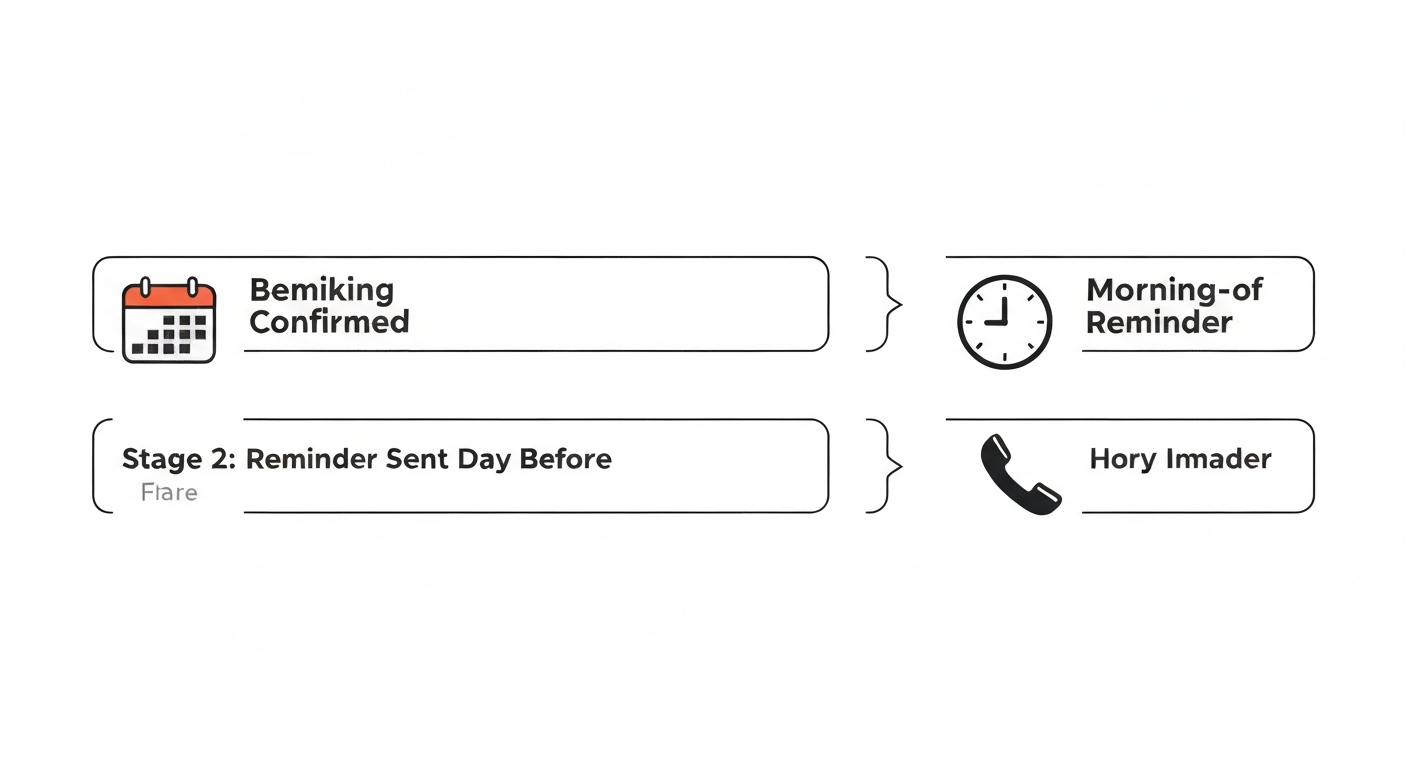
You don't need anything complicated. Three messages. All automated.
The first goes out when the appointment is booked. A confirmation with the date, time, and any details they need. This sets the expectation immediately and gives them something concrete to save.
The second goes out the day before. "Just a reminder you've got an appointment with us tomorrow at [time]. Reply YES to confirm or let us know if you need to reschedule."
The third goes out the morning of. "See you today at [time]. If anything has changed, let us know."
That's it. Three texts. Fully automated. Sent for every appointment without you touching anything.
The "reply YES to confirm" is important. It creates a micro-commitment. Once someone has actively confirmed, they're far less likely to skip it. And if they need to cancel, they do it early enough for you to fill the slot.
What changes when this runs automatically
The first thing you notice is fewer empty slots. Customers who would have forgotten now show up. Customers who can't make it cancel in advance instead of ghosting, giving you time to fill the gap.
The second thing is less chasing. You're not spending your evenings calling people to confirm. The system does it. Every appointment. Every time. You don't think about it.
The third thing is you look more professional. Customers notice when a business sends clear confirmations and timely reminders. It signals that you're organised, reliable, and serious about their time. That impression matters before you've even done any work.
And the fourth thing is the money. Fewer no-shows means more completed jobs per week. More completed jobs means more revenue. More completed jobs also means more opportunities for automated review requests to go out, which builds your Google presence over time. See how review automation compounds with appointment reminders
This is all built into the system we set up at Chrisp Design. Appointment reminders, confirmations, follow-ups, review requests. All connected. All running in the background for every booking. See how the Growth System works
The admin tasks you're doing manually right now, the ones eating your evenings and still not getting done consistently, all of this can run on its own. Read more about automating your admin
"No-shows aren't a customer problem. They're a reminder problem. And reminder problems are solved by a system, not by you trying to call five people at 6pm while making dinner."
Key takeaways
- No-shows cost local businesses far more than just the lost job. Factor in travel, time, and the paying customer who could have had that slot.
- Most people who don't show up aren't being rude. They forgot, weren't reminded, or didn't have an easy way to cancel or reschedule.
- Manually calling to confirm every appointment doesn't scale. It relies on you having time, remembering, and the customer actually picking up.
- An automated three-step reminder sequence (booking confirmation, day-before text, morning-of text) cuts no-shows by 30 to 50 percent for most businesses.
- When reminders run automatically for every appointment, you spend less time chasing, lose fewer slots, and look more professional to every customer.

Shaun Chrisp
Founder, Chrisp Design
Shaun has spent over a decade helping local businesses grow with smarter marketing systems. Chrisp Design builds websites, AI systems and automation for businesses across the UK.
Find our guides useful? Add Chrisp Design as a preferred source on Google to see more of our articles in your search results.
Add as preferred source on Google