What does Google's 7-11-4 rule mean for local businesses
Before a customer calls you, they've already spent hours researching you. Here's exactly what the 7-11-4 rule means, and what your business needs to do to win them over before your competitors do.
8 min readThe brutal truth about local marketing in 2026 and why the businesses winning aren't always the best ones
Before a customer calls you, they've already decided you might be the one. They Googled. They checked your reviews. They looked at your website. By the time they pick up the phone, they're warm. They're ready.
And if you don't answer, they call the next one on the list.
That's the reality of how customers buy in 2026. And most local businesses have no idea how it works, or why they keep losing jobs to competitors who aren't even better than them.
In this article:
- What is Google's 7-11-4 rule?
- 7 hours of engagement
- 11 interactions
- 4 locations
- Why this matters more than ever right now
- What this actually means for local businesses
- How to build seven hours of content without losing your mind
- Building 11 interactions without a marketing team
- How Chrisp Design builds this for you
What is Google's 7-11-4 rule?
It's a framework from Google's own research that explains exactly how modern customers make purchasing decisions.
Before someone spends money with a local business, they need 7 hours of engagement with that business. Across 11 separate interactions. In 4 different locations.
Not all at once. Not in one sitting. Spread across days, sometimes weeks: reading, watching, scrolling, comparing.
By the time they call you, most of that journey is already done.
7 hours of engagement
Seven hours sounds like a lot. It's not seven hours on your website. It's the total time a customer spends with your brand before they feel confident enough to hand over money.
A blog post they found on Google, 15 minutes. Your Google reviews, 10 minutes. A video on your Facebook page, 5 minutes. Your website, 8 minutes. A second look at your reviews a few days later, another 10 minutes.
It adds up. Slowly. Without you even knowing they're doing it.
If your business only has a website and nothing else, you're asking customers to make a decision you haven't given them enough to make.
11 interactions
Eleven separate touchpoints before they buy. A Google search. A website visit. A review read. A social media scroll. An email opened. A YouTube video watched.
Think about how you buy something yourself. You don't buy from the first result you find. You look around, come back, check again, compare, then decide.
Your customers do exactly the same. The businesses getting chosen aren't always the best ones. They're the ones showing up the most times.
4 locations
Four different platforms or channels. Website. Google Business Profile. Social media. Review platforms.
Most local businesses have one or two covered. A website. Maybe a Facebook page they post on occasionally.
That's not enough. If you're only in one or two of these places, a huge chunk of your potential customers can't find enough about you to feel confident. So they go with someone else. Not because that person is better. Because they showed up more.
Why this matters more than ever right now
The rule hasn't changed. The speed has.
A customer in 2026 can complete their entire 11-interaction journey in a single afternoon. They search for a local business, visit the website, check Google reviews, scroll Instagram, watch a testimonial video, compare a couple of competitors, and make a decision all before dinner.
If you're not showing up at enough of those touchpoints, you don't get a second chance. They've already decided.
What this actually means for local businesses
Most trades have a website. Some have a Google Business Profile. A few post on social media now and then.
That's not a system. That's hoping someone finds you and happens to see enough to trust you.
Here's what covering all four locations actually looks like:
Your website
Needs to do more than exist. It should answer questions, build trust, and capture enquiries. Not a digital brochure, a sales tool that works while you're on a job.
Your Google Business Profile
Needs to be active. Regular posts, photos, review responses, accurate information. This is where most local customers find you first. If it looks abandoned, they move on.
Social media
Doesn't mean posting every day. It means showing up consistently enough that when someone checks, and they will check, there's something there. Facebook and Instagram for most trades. That's it.
Reviews
Your most powerful trust signal. Not a hundred reviews from three years ago. Recent ones. Steady ones. Customers making decisions in 2026 want to see that people are still using you and still happy.
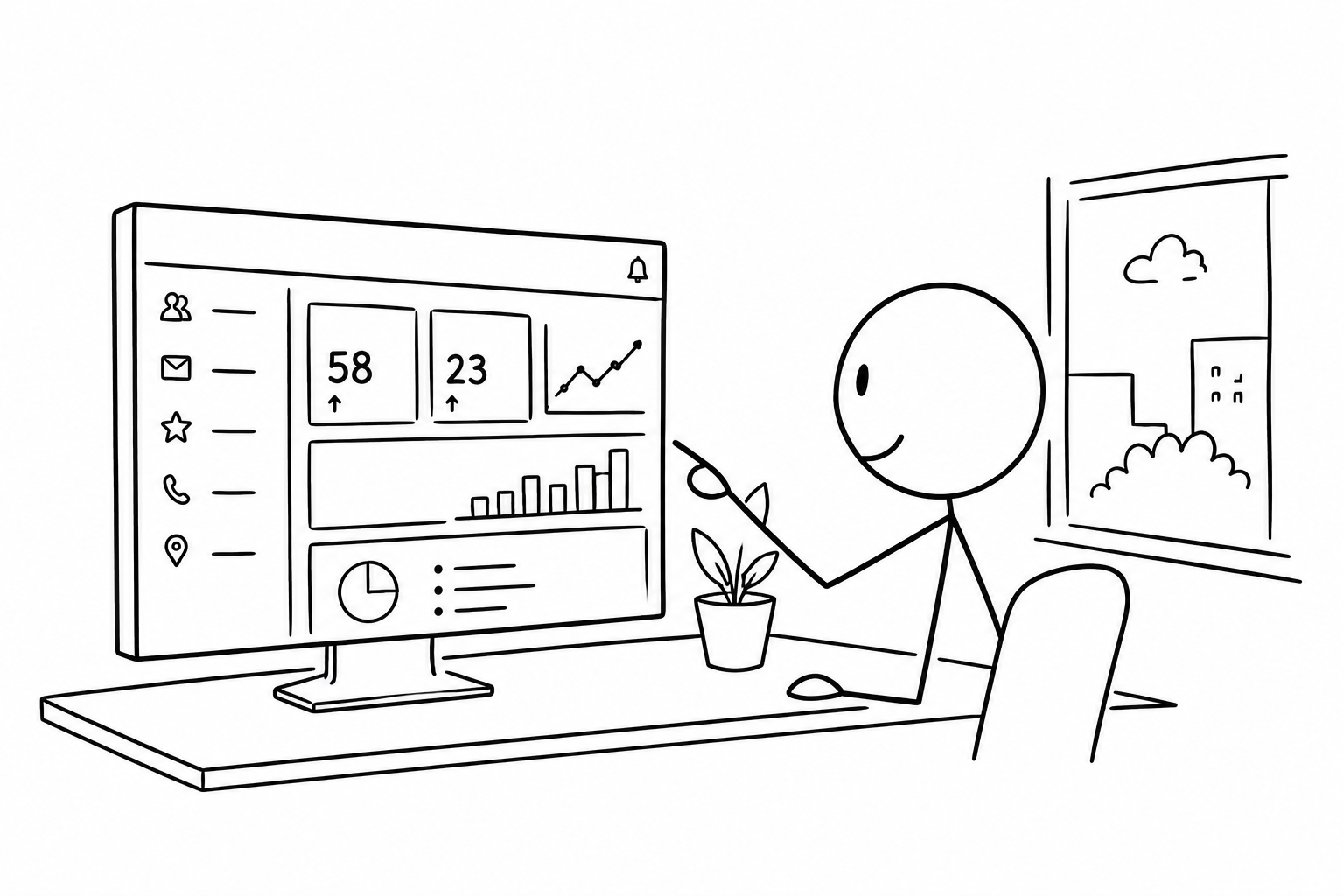
How to build seven hours of content without losing your mind
You're not sitting down to write seven hours of content. You're creating things that get consumed multiple times, in multiple formats, across multiple places.
Blog posts and guides
One blog post answering a question your customers actually search for, that's 20 minutes of engagement per reader.
Video content
A five-minute video on your Facebook page, watched three times by someone comparing you to a competitor, that's 15 minutes gone.
Email sequences
An automated email sequence nurturing a lead over two weeks, each email opened and read adds to the total.
Case studies and results
Customers read those slowly. Carefully. Because it's directly relevant to what they're about to spend money on.
You don't need more content. You need the right content, in the right places, working on its own.
Building 11 interactions without a marketing team
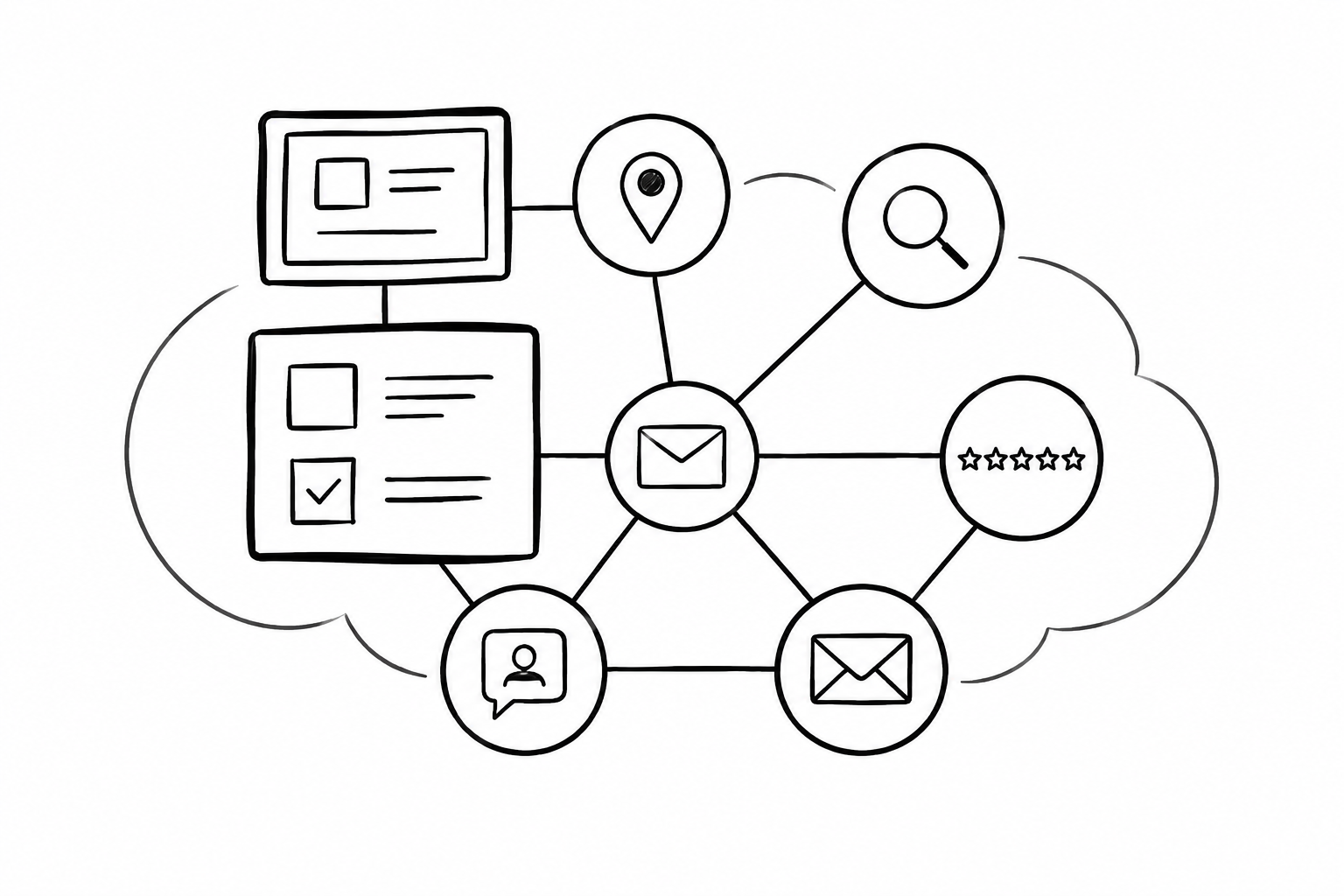
You don't need a big budget to hit 11 touchpoints. You need a connected system.
Automated follow-up sequences. Google review requests sent after every job. Retargeting ads that follow people who visited your website. Social media posts scheduled in advance. Email sequences that run without you touching them.
In 2026 this stuff runs in the background. The businesses winning locally aren't the ones spending the most. They're the ones showing up the most consistently, automatically, across every channel their customers use.
How Chrisp Design builds this for you
We build the whole system.
Website covers location 1. Google Business Profile optimisation covers location 2. Social media systems cover location 3. Automated review generation covers location 4.
Add AI-powered follow-up, email marketing, and retargeting, and you're building all 11 interactions automatically. Without lifting a finger.
Most of your competition have a website and hope. You'd have a system that works while you're on the tools.
"The businesses winning locally in 2026 aren't the ones working hardest. They're the ones showing up in the most places, with the most consistency, and the most content."
Key takeaways
- Before buying, customers need 7 hours of engagement with your brand across 11 interactions in 4 different locations, and most of that happens before they ever contact you
- The speed has increased dramatically. A customer can complete their entire decision journey in a single afternoon in 2026
- Most local businesses only cover one or two of the four locations, which means a large portion of potential customers never see enough to feel confident
- You don't need hours of content. You need the right content in the right places, consumed multiple times across multiple formats
- A connected marketing system that builds touchpoints automatically is the most effective way to win the 7-11-4 rule

Find our guides useful? Add Chrisp Design as a preferred source on Google to see more of our articles in your search results.
Add as preferred source on Google